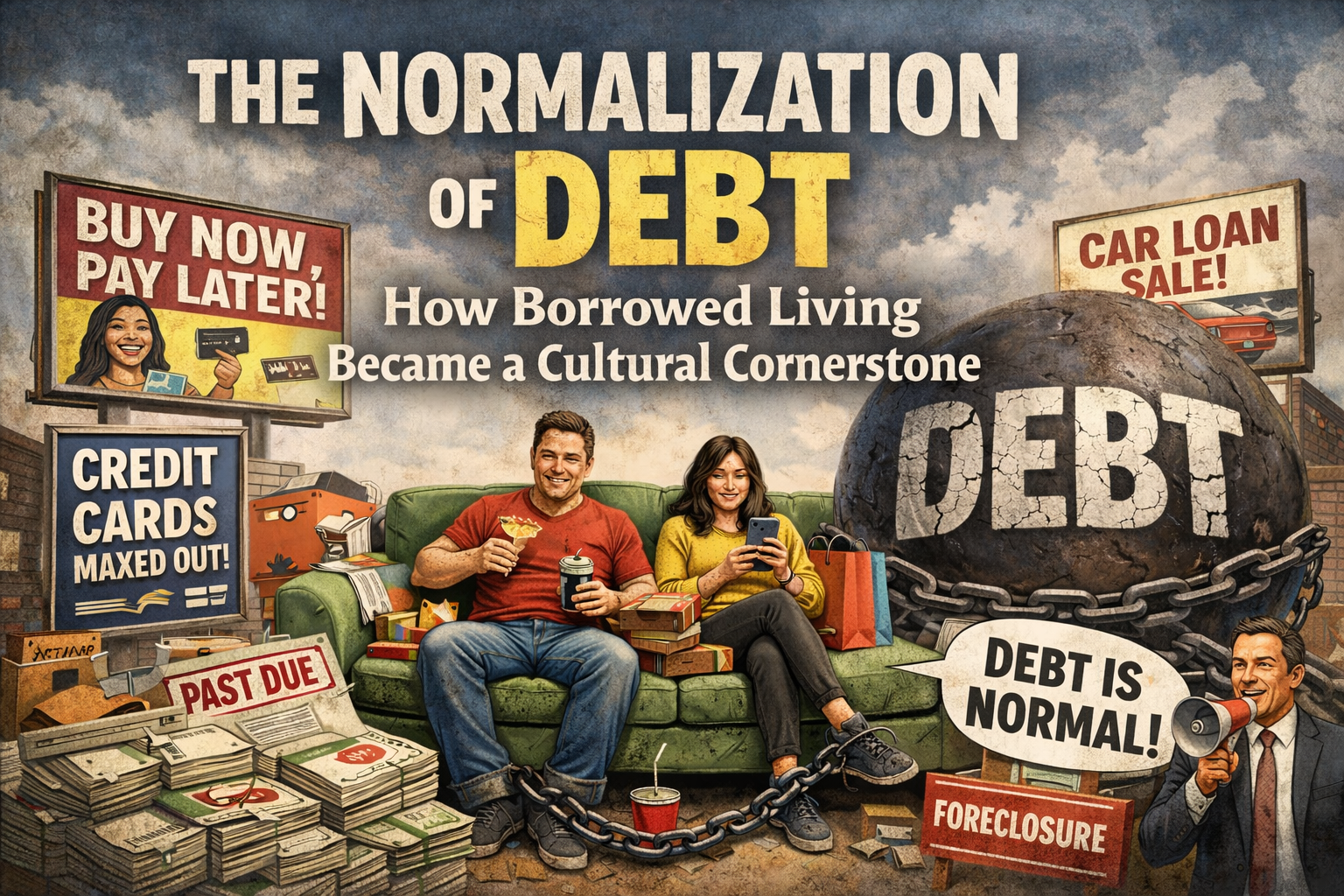
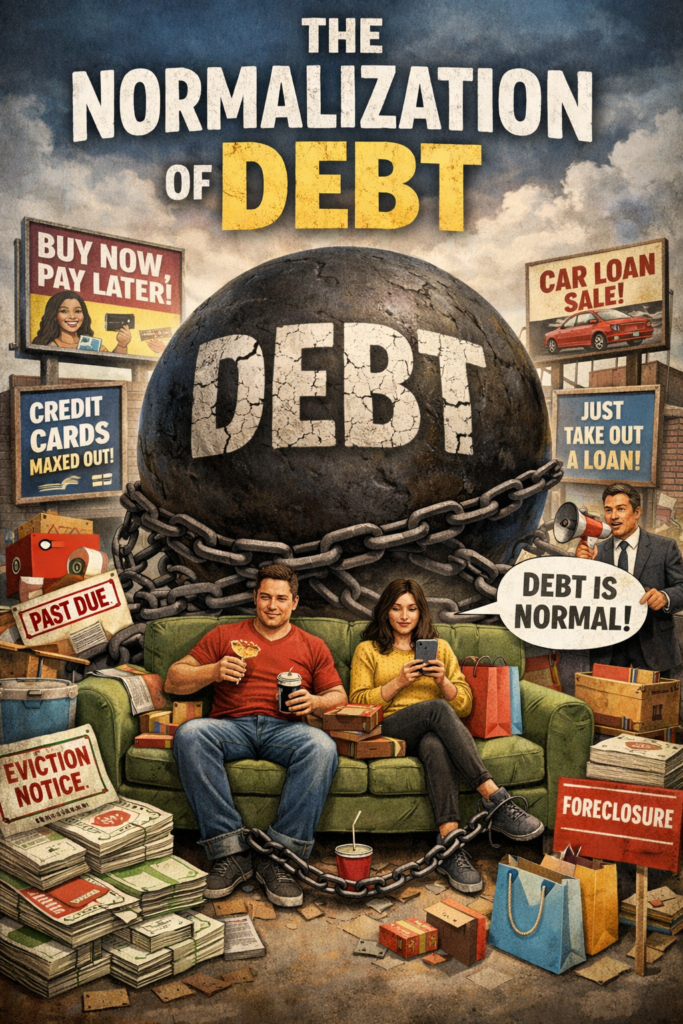
For generations, the specter of debt carried a potent social stigma. It whispered of imprudence, failure, and a lack of moral fortitude. Our grandparents often lived by the adage, “If you can’t afford it, you don’t buy it.” Savings were sacred, and the concept of “living within one’s means” was a deeply ingrained cultural virtue. Yet, in the span of a few decades, this paradigm has undergone a profound inversion. Today, debt is not merely a financial tool; it has seeped into the bedrock of modern culture, becoming a normalized, expected, and even engineered component of everyday life. From education and housing to consumer goods and healthcare, living on borrowed money has shifted from a last resort to a primary strategy for navigating contemporary society. This essay explores how debt became culturally embedded, examining the forces that normalized borrowed living and the profound societal consequences of this quiet revolution.The Normalization of Debt
The Historical Pivot: From Productive to Lifestyle Debt
Historically, debt was primarily associated with productive investment. A business loan to expand operations, a mortgage to acquire an asset (a home), or even a farmer’s line of credit for seeds before harvest—these were debts incurred with a clear path to increased future value or basic survival. The risk was acknowledged, but the purpose was seen as constructive.
The cultural shift began in earnest in the post-World War II era, particularly in the West. The rise of consumer capitalism demanded a new engine for growth. With production capacities soaring, the limiting factor was no longer supply, but demand. How could markets continue to expand if people only bought what they could immediately afford? The answer was the systematic democratization of credit.
The introduction and mass marketing of the credit card in the 1950s and 60s, epitomized by Diners Club and later Visa and Mastercard, marked a pivotal moment. Debt was repackaged from a necessity into a convenience, and then into a lifestyle enhancer. Advertising seamlessly associated credit with freedom, success, and immediate gratification. “Don’t leave home without it” wasn’t just a slogan for a card; it was an instruction for a new financial reality. This laid the groundwork for the fundamental cultural recalibration: debt could be used not just for a home or education, but for a television, a vacation, or a new wardrobe. The link between debt and tangible, appreciating assets was broken, replaced by a link to consumption and experiential living.
The Engines of Normalization: How Debt Became Inescapable
Several interconnected forces have acted as powerful engines, normalizing debt until it became the cultural air we breathe.
1. The Skyrocketing Cost of Core Aspirations: Housing, Education, and Healthcare
The most potent normalizer is necessity. For younger generations, key pillars of the “good life” have become virtually inaccessible without massive debt.
- Higher Education: Framed as a non-negotiable ticket to the middle class, university tuition has far outpaced inflation and wage growth. Student loans have morphed from an aid into a prerequisite, forcing millions to begin adulthood with a five or six-figure financial anchor. The cultural message is clear: to succeed, you must borrow.
- Homeownership: The defining asset of middle-class stability is now often gatekept by monumental mortgages. In many urban centers, even down payments require years of saving or familial wealth transfer. The 30-year mortgage is so standard it’s rarely questioned, normalizing a lifetime of debt service as the price of basic shelter and social standing.
- Healthcare: Particularly in nations like the United States, medical debt is a leading cause of bankruptcy. An unexpected illness can trigger borrowing, making debt an involuntary byproduct of survival rather than a choice.
2. The Financialization of the Economy and the Profit Engine
The late 20th century saw the economy’s center of gravity shift from production to finance. Debt is the raw material of this financialized world. Banks, credit card companies, and private equity firms profit not just from lending, but from the intricate bundling, selling, and servicing of debt itself. This created a powerful institutional interest in expanding borrowing at all levels of society. Sophisticated risk-modeling, targeted marketing (especially to vulnerable communities), and the creation of ever-more consumer-friendly credit products (like “Buy Now, Pay Later” schemes) are not neutral services; they are active cultivators of a debt culture.
3. The Erosion of Wage Growth and the Rise of Precarity
While costs for essentials have soared, median wages (adjusted for inflation) have largely stagnated since the 1970s. The simultaneous decline of stable, unionized employment and the rise of the gig economy have created widespread income precarity. Debt has seamlessly filled this gap, acting as a private safety net. When wages don’t cover monthly bills or an emergency arises, credit cards and payday loans become the buffer that shaky incomes and thin public welfare systems do not provide. Debt is no longer just for luxuries; it’s for groceries, utilities, and car repairs, normalizing it as a supplement to inadequate income.
4. The Psychological Machinery: Marketing, FOMO, and Digitized Spending
Culture is shaped by narratives, and modern marketing has masterfully crafted a pro-debt narrative. “Zero percent introductory APR,” “No payments for 24 months,” and “Get the latest model today” are all cultural cues that reframe debt as smart, manageable, and painless. The psychological pain of parting with cash is dulled by the abstract swipe of a card or the click of “one-click purchase.”
Social media amplifies this through relentless lifestyle broadcasting and Fear Of Missing Out (FOMO). The curated perfection of peers’ lives—funded by undisclosed debt—creates pressure to participate in experiences and consumption cycles immediately, not when one can save. Digital payment systems further abstract money, making borrowing and spending feel less “real” than handing over physical currency.
The Cultural Consequences: Living in the Red
The normalization of debt is not a victimless economic trend. It has profound cultural and psychological repercussions.
1. The Redefinition of Adulthood and Success
Adulthood is now culturally synonymous with debt management. Coming of age means getting a student loan, financing a car, and qualifying for a credit card. Success is measured not by freedom from obligation, but by the ability to service prestigious debts—the large mortgage in a good neighborhood, the premium car lease. This inverts traditional ideals of independence, creating a state of perpetual financial dependency on lenders.
2. The Deferral of Life and Chronic Future-Discounting
A debt-fueled life is a life on hold. Major decisions—starting a family, changing careers, pursuing creative passions, retiring—are deferred until debt levels are “manageable.” This creates a pervasive sense of living for a future that never arrives, as new debts often replace old ones. The cultural focus shifts from long-term building and resilience to short-term monthly payments, eroding the capacity for future planning.
3. The Inequality Amplifier
While debt is culturally normalized, its consequences are not equally shared. Wealthy individuals and corporations use debt as leverage (low-interest mortgages, business loans) to acquire more assets, increasing their wealth. For those without assets, debt—often at higher interest rates—is used for consumption and survival, trapping them in a cycle of payments that drains wealth. Thus, the debt culture becomes a powerful engine of inequality, where the system is rigged to extract wealth from the bottom and middle to the top.
4. The Erosion of Resilience and the Anxiety Epidemic
A society living on borrowed money is a fragile one. It has no buffer against systemic shocks like a pandemic or a recession. On a personal level, this manifests as chronic financial anxiety. The constant background stress of managing payments, the fear of a missed paycheck, and the shame of being “in over one’s head” contribute significantly to the modern mental health crisis. Debt is not just an economic condition; it’s a psychological burden that colors every life decision.
5. The Civic Cost: A Distracted and Disempowered Polity
When individuals are consumed by personal financial precarity, their capacity to engage in civic life diminishes. The mental bandwidth required to understand complex political issues, organize for collective economic rights, or challenge systemic inequities is depleted by the daily struggle of managing debt. This creates a politically subdued populace, more focused on individual survival than on collective action to address the root causes of their financial strain.
Pathways Forward: Can We Cultivate a New Culture?
Reversing the cultural normalization of debt is a monumental task, as it requires confronting powerful economic structures and rewiring deep-seated social behaviors. However, pathways exist.
1. Reinstating the Social Safety Net and Boosting Wage Power
Reducing reliance on debt as a private safety net requires strengthening the public one. Policies that ensure living wages, universal healthcare, affordable housing, and debt-free or low-cost public education address the necessity that drives so much borrowing. When people’s basic needs are met through collective provision, the compulsion to turn to high-interest credit diminishes.
2. Financial Literacy That Challenges, Not Accommodates, the System
Current financial literacy often focuses on teaching people to be better debt managers within a predatory system—how to improve a credit score, consolidate loans, or budget for payments. A more radical form of literacy would educate on the history of consumer credit, the tactics of the financial industry, and the collective power of alternatives like unions, cooperatives, and community lending circles. It would teach skepticism alongside budgeting.
3. Cultivating a Counter-Culture of Sufficiency and Delayed Gratification
Cultural shifts require new stories. Movements around minimalism, conscious consumption, financial independence, and “slow living” offer potent counter-narratives to the buy-now-borrow-later ethos. Celebrating saving, repairing, and buying second-hand must be revived not as signs of poverty, but as markers of wisdom, environmental stewardship, and true independence.
4. Policy and Regulation: Curbing Predation and Creating Alternatives
Government has a role in de-normalizing predatory debt. This includes strict usury laws to cap interest rates, robust regulation of payday lenders and credit card terms, and policies that allow for the discharge of student loan debt in bankruptcy. Furthermore, public investment in non-profit community banks and credit unions can provide ethical alternatives to the for-profit credit system.
Conclusion: A Culture at a Crossroads
Debt has undeniably become cultural. It is the silent partner in our education, the foundation of our homes, the enabler of our consumption, and the source of our underlying anxiety. It is normalized not through accident, but through the deliberate alignment of economic interests, political choices, and psychological manipulation. We have built a society where borrowed living is not a personal failing, but the expected—and often only—path forward.
The consequences are a populace psychologically strained, civically disengaged, and economically vulnerable, with the benefits accruing to a financial sector that profits from our perpetual obligation. Recognizing this normalization is the first step. The question that now confronts us is whether we accept this indebted existence as the inevitable cost of modernity, or whether we begin the difficult work of cultivating a new culture—one that prizes resilience over consumption, security over leverage, and collective provision over individual indebtedness. The future of our economic and social health depends on which path we choose to normalize next.